Planning your first time Lake Tahoe trip starts with one decision: choose a home base before mapping activities. The lake spans California and Nevada, with distinct towns spread around 72 miles of shoreline. Staying near your main interests will save hours in the car.
Lake Tahoe sits at 6,225 feet above sea level. Summer brings beach days and hiking, while winter centers on skiing and snow play. Spring and fall offer quieter roads, though changing weather can limit access to trails and attractions.
How to Plan a first time Lake Tahoe Trip
A first time Lake Tahoe itinerary works best when it focuses on one region each day. Traffic, mountain roads, and limited parking make rapid lake-wide sightseeing frustrating. Leave room for weather changes and slow meals.
South Lake Tahoe offers the widest range of hotels, restaurants, casinos, and evening entertainment. Tahoe City, Kings Beach, and Incline Village provide a calmer base near North Shore beaches. The West Shore suits travelers who prioritize forests, cabins, and Emerald Bay access.
Choose the Right Season
July and August bring warm afternoons, long daylight hours, and the largest crowds. Lake water remains cold, even during summer. Pack a dry layer for boat rides and late afternoons near the shore.
September often delivers mild days with fewer visitors. However, wildfire smoke can affect air quality anywhere in the Sierra Nevada. Check local forecasts and fire reports before driving into the basin.
Winter conditions can change within hours. Carry chains unless your vehicle meets current traction requirements, and learn how to install them. California and Nevada transportation agencies post road controls and closures online.
May and early June require flexibility. Snow can linger on higher trails, while some beaches and seasonal businesses operate on reduced schedules. October and November may bring the first major storms.
Allow Time to Adjust to the Altitude
Drink water regularly and limit alcohol on your first evening. Headaches, poor sleep, and shortness of breath can signal mild altitude sickness. Take a slower pace if you arrive directly from sea level.
Seek medical help if symptoms become severe or continue to worsen. Descending to a lower elevation often provides relief. Travelers with heart or respiratory conditions should consult a clinician before strenuous activities.
Where to Stay Around Lake Tahoe
South Lake Tahoe and Stateline
South Lake Tahoe works well for travelers who want plenty of services close by. Hotels cluster near Heavenly Village, the lakefront, and the California-Nevada state line. Stateline casinos add live entertainment and late-night dining.
This area also has the basin’s broadest restaurant selection. You can find full breakfasts, quick sandwich counters, steakhouses, pizza shops, and dining rooms with serious wine lists. Reserve dinner tables during ski weekends and summer holidays.
Tahoe City and the North Shore
Tahoe City places visitors near the Truckee River outlet and several West Shore attractions. Kings Beach has a public beach, casual restaurants, and direct access to North Shore roads. Incline Village offers convenient access to Nevada beaches, though some beaches restrict entry to residents and their guests.
North Shore evenings generally feel quieter than nights in Stateline. Restaurant kitchens may close earlier, especially outside peak season. Confirm hours before committing to a late dinner.
West Shore
The West Shore gives travelers quick access to wooded state parks and Emerald Bay. Lodging consists mainly of cabins, inns, vacation rentals, and smaller resorts. Grocery choices and late-night services remain limited.
Stock up before arriving if your rental includes a kitchen. Keep meals simple and buy only what you can store securely. Bears can open coolers and enter unlocked vehicles.
Getting Around the Lake
A car gives you the most flexibility, but it does not guarantee convenient parking. Lots at trailheads and popular beaches often fill early. Start before 8 a.m. on busy summer weekends.
Public bus systems serve portions of the North Shore, West Shore, and South Shore. Routes and schedules change by season. Check Tahoe Transportation District and Tahoe Truckee Area Regional Transit before planning a car-free day.
Seasonal shuttles can reduce parking stress at selected beaches and recreation areas. Some services require advance booking. Confirm pickup locations because many roadside stops lack shelter or nearby facilities.
Reno-Tahoe International Airport provides the closest major commercial air service. Driving times depend heavily on weather and traffic. Winter storms can turn a routine airport transfer into a long trip.
What to Do on Your First Visit
See Emerald Bay
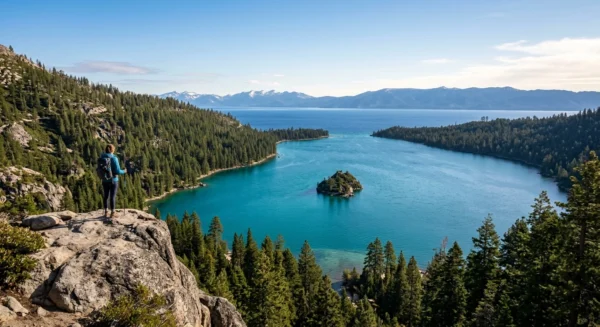
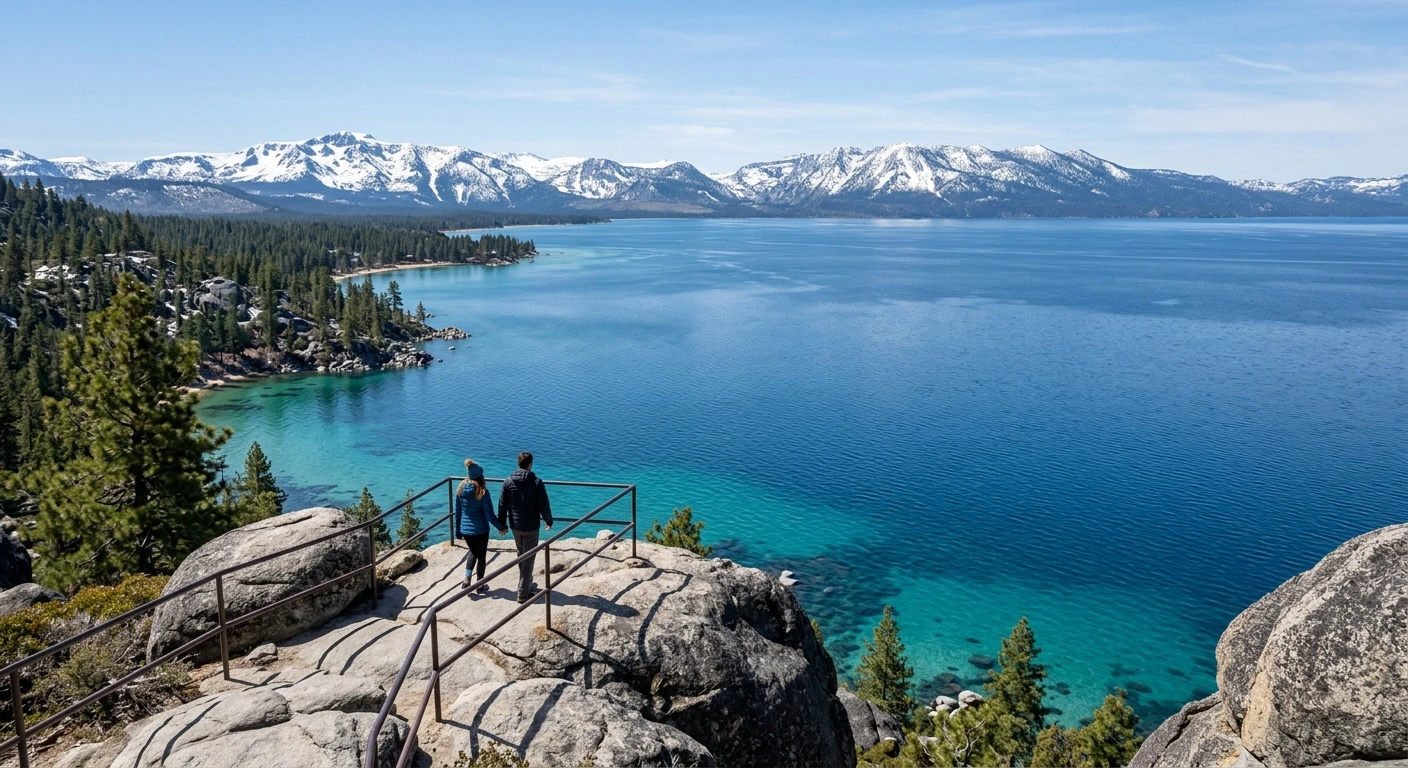
Emerald Bay State Park offers one of the lake’s clearest combinations of granite slopes, forest, and blue water. Roadside overlooks provide quick views, but parking spaces disappear early. Never stop in a traffic lane for photographs.
The trail to Vikingsholm drops about one mile from the parking area. Remember that the return trip climbs steadily at altitude. Tours, facilities, and road access follow seasonal schedules.
Spend Time at a Beach
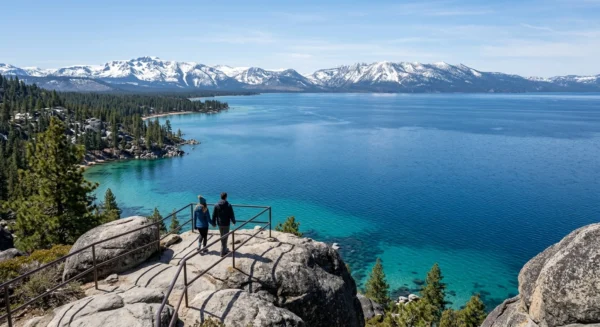
Sand Harbor features clear water, rounded boulders, and kayak access on the Nevada shore. Nevada State Parks may require advance reservations during busy periods. Review current entry rules before leaving your hotel.
Kings Beach and Commons Beach provide convenient North Shore options near food and shops. Pope Beach and Baldwin Beach serve the South and West shores. Entry fees, parking rules, and operating dates vary.
The lake stays cold enough to cause rapid fatigue. Wear a life jacket while paddling, and stay close to shore when winds rise. Afternoon gusts can make the return trip much harder.
Take a Hike
Easy lakeside walks include sections of the Tahoe East Shore Trail and paths near Taylor Creek. More demanding routes climb toward Eagle Lake, Mount Tallac, and the Desolation Wilderness. Snow and ice can remain at higher elevations well into summer.
Carry more water than you expect to need. Bring sun protection, a paper or downloaded map, and an insulating layer. Mobile service drops out across many trail systems.
Desolation Wilderness requires permits, with stricter rules for overnight trips. Check current Forest Service requirements before setting out. Rangers can also provide updates on snow, fire restrictions, and trail damage.
Plan a Winter Day
Lake Tahoe’s ski areas range from large destination resorts to smaller community hills. Lift tickets often cost less when purchased in advance. Rental shops also run short on common boot and ski sizes during holiday periods.
Non-skiers can book snowshoe tours, sledding sessions, or scenic gondola rides. Use designated recreation areas rather than pulling onto an unplowed roadside. Snowbanks can hide drainage channels and unstable edges.
Eating Well Around Lake Tahoe
Mountain-town dining rewards good timing. Eat breakfast before the trailhead rush, carry lunch, and book dinner rather than waiting until hunger sets in. Many kitchens reduce hours between major summer and winter seasons.
For breakfast, look for kitchens serving eggs, potatoes, oatmeal, and strong coffee without excessive garnish. A substantial morning meal makes sense before skiing or hiking. Grab pastries for later, but store them out of sight in your vehicle.
Lunch counters near beaches often become crowded between noon and 2 p.m. Order sandwiches before heading out, or choose a restaurant away from the waterfront. Soup and a grilled sandwich can hit the mark after a cold ski morning.
Dinner menus lean toward steaks, burgers, pizza, fish, and seasonal California produce. Nevada casino dining rooms often keep later hours than small California restaurants. Ask about service charges and resort fees before settling the bill.
Lake views can raise menu prices without improving the cooking. Read recent menus, check operating hours, and choose a dining room that matches your plans. Good service matters more after a long day outside.
Weather, Wildlife, and Safety
Mountain weather shifts quickly in every season. Pack sunscreen, sunglasses, and a warm layer even on clear summer mornings. Afternoon thunderstorms can bring lightning to exposed ridges.
Black bears live throughout the Tahoe Basin. Never leave food, scented toiletries, or trash inside an unattended vehicle overnight. Use bear-resistant lockers and follow the instructions at your lodging or campsite.
Dry summer conditions also raise wildfire risk. Obey fire restrictions and avoid parking on dry grass. If smoke arrives, monitor official air-quality reports instead of relying on distant views.
A Practical Lake Tahoe Itinerary
For your first time Lake Tahoe visit, keep one day flexible. Weather, traffic, or lake conditions may change your plans. A free afternoon also creates space for an unhurried beach stop or early dinner.
Day One: South Shore and Emerald Bay
Start at an Emerald Bay overlook before the parking areas fill. Continue to a South Shore beach or walk near Taylor Creek. Finish with dinner near your hotel rather than driving around the lake after dark.
Day Two: North Shore
Drive to Tahoe City, Kings Beach, or Incline Village. Pair a short lakeside walk with several hours at the beach. Return before evening traffic builds along the main shoreline roads.
Day Three: Choose One Main Activity
Book a boat trip, hike a longer trail, or spend the day at a ski area. Avoid combining several distant reservations. One well-planned outing leaves time for weather delays and a proper meal.
Make Your First Visit Manageable
Lake Tahoe rewards a slower schedule. Choose one home base, group nearby activities, and start early when parking matters. Check road conditions, reservation rules, and seasonal closures each morning.
Good planning protects the part of the trip that matters most: time beside the lake. Keep a spare layer in the car, carry water, and leave room for a long lunch. That approach turns a first time Lake Tahoe trip into a practical, enjoyable visit.